What This Service Involves
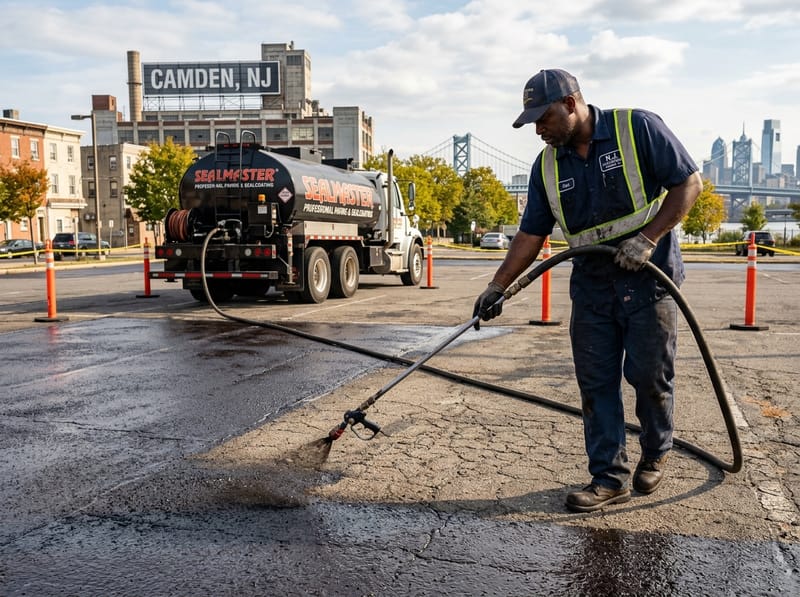
Crack sealing is a preventive asphalt repair service that closes active cracks before they turn into larger failures. For crack sealing in Camden, our work focuses on stopping moisture from entering the pavement structure, because water is one of the main reasons small cracks become larger problems. The service is used on driveways, parking areas, private lanes, and other asphalt surfaces that still have a sound base but show signs of opening seams or surface separation.
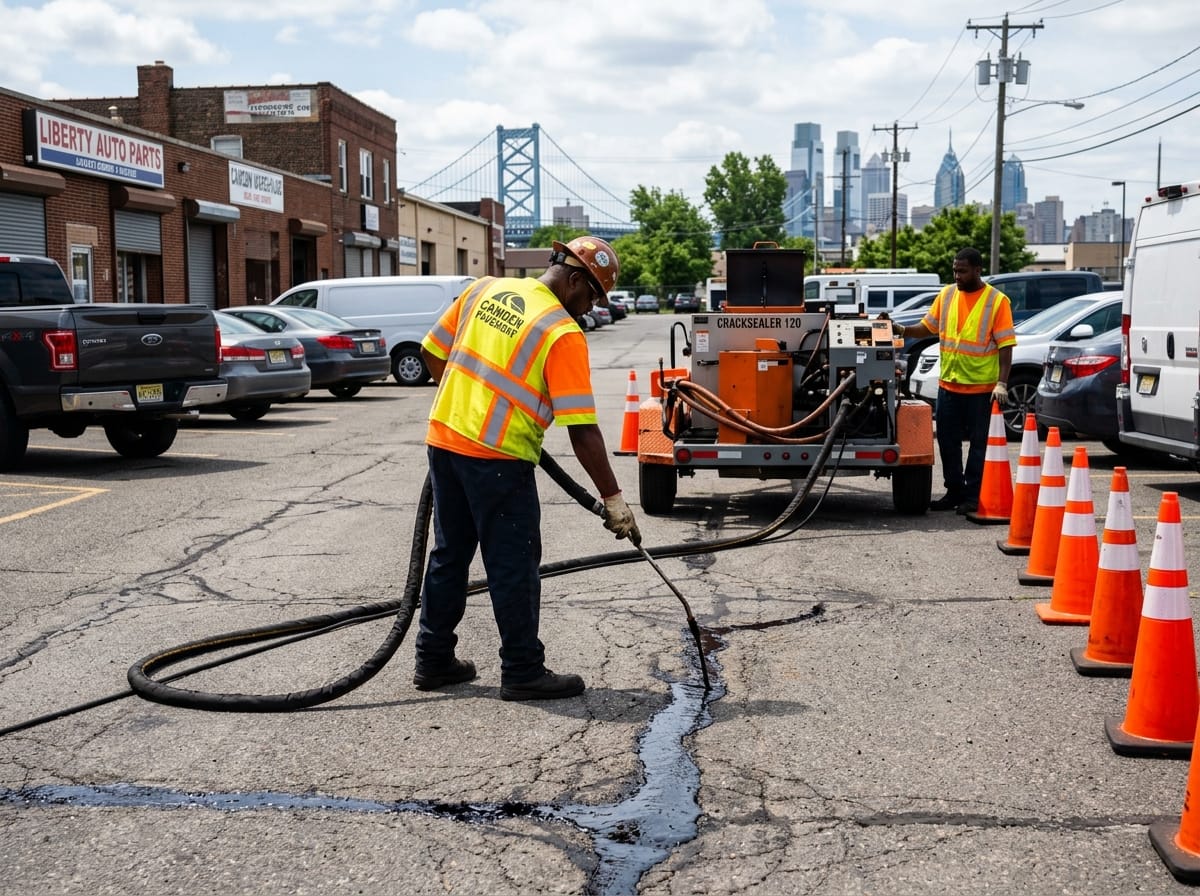
The process is straightforward, but the details matter. We begin by inspecting the pavement to identify which cracks are suitable for sealing and which areas need a different repair. Then we clean the cracks so the sealant can bond properly. Dirt, loose aggregate, vegetation, and old debris are removed first, because sealant applied over a dirty crack will not perform the way it should.
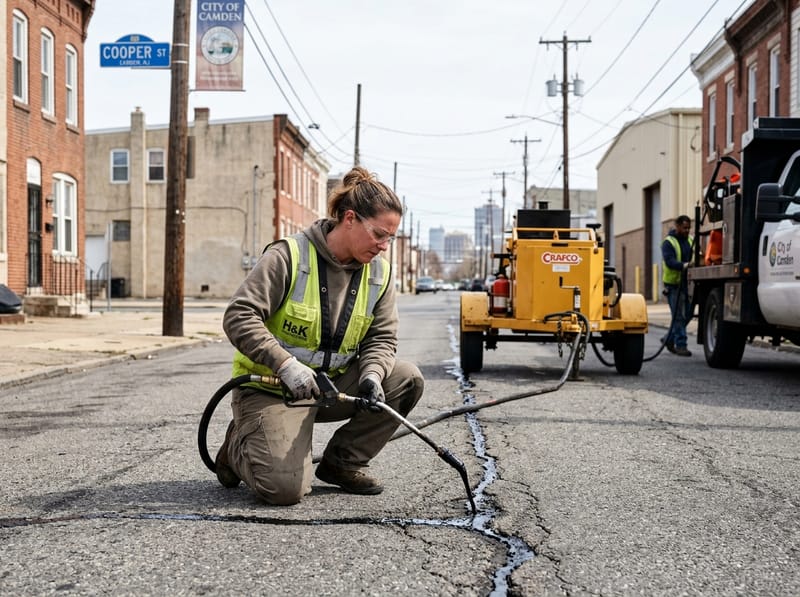
After preparation, a specialized crack sealant is applied into the opening and smoothed so it can flex with the pavement. That flexibility is important in Camden, where seasonal temperature swings can cause asphalt to expand and contract. A good crack seal helps the pavement move without letting water work its way deeper into the surface. In simple terms, crack sealing is a smart maintenance step that helps your asphalt last longer and stay more dependable.
- Purpose: keep water out of active cracks and slow down further deterioration.
- Best use: stable asphalt with isolated cracks or early surface separation.
- Main benefit: extend the useful life of the pavement before more costly repairs are needed.
When done at the right time, crack sealing is one of the most practical ways to protect an asphalt surface without replacing the entire area.
When You Need This Service
You likely need crack sealing when you see cracks that are still narrow enough to repair but wide enough to let in water and debris. In Camden, this often shows up after seasonal weather changes, long periods of sun exposure, or repeated vehicle traffic. A crack that looks minor today can become a larger opening after a period of rain, heat, or colder temperatures.
There are also visual signs that the pavement is ready for service. If the edges of a crack are beginning to crumble, if weeds are pushing through the opening, or if the crack seems to be growing longer, that is a strong signal that sealing should happen soon. Standing water around the crack is another warning sign, because it means moisture is sitting where it should not be.
Many property owners schedule crack sealing as a proactive maintenance step rather than waiting for obvious damage. That approach is often the most practical because it protects the pavement before deeper problems appear. For crack sealing in Camden, the goal is to act while the asphalt can still be preserved, not after the surface has broken down across wide areas.
- Visible opening: cracks are easy to see and no longer look like hairline surface marks.
- Edge breakdown: the sides of the crack are starting to crumble or flake.
- Water entry: rainwater is collecting inside or around the crack.
- Plant growth: weeds or grass are coming through the pavement.
- Pattern spread: new cracks are appearing near older ones.
If your surface is still structurally sound, this is usually the right time to seal the cracks and protect the pavement from further damage.
Why Problems Happen
Cracks in asphalt do not appear for one single reason. They usually develop because the pavement is being affected by more than one stress at the same time. In Camden, those stressors often include heat, cold, moisture, vehicle weight, and drainage conditions that allow water to linger near the surface. Asphalt is designed to handle use, but it still moves and ages over time.
Temperature changes are one of the biggest contributors. As the surface heats up, it expands. As temperatures drop, it contracts. That constant movement puts pressure on the top layer and slowly opens tiny separations. Once a crack opens, water can move inside the pavement. When that water freezes and thaws, the crack can widen further and the base below the surface can begin to weaken.
Traffic also plays a role. Repeated turning, braking, and parking put stress on the same parts of the pavement over and over again. If the asphalt has already started to dry out or oxidize, it becomes less flexible and more likely to split. Drainage issues can speed up the process too. When water does not run off correctly, it sits on the pavement and works into open seams.
Crack sealing in Camden is valuable because it addresses the problem at the point where the damage is still manageable. Instead of waiting for the entire surface to fail, the service helps isolate the openings and reduce the chance that the pavement will deteriorate faster than necessary.
- Weather movement: repeated expansion and contraction weakens the surface.
- Moisture intrusion: water entering a crack creates deeper damage over time.
- Traffic stress: vehicle use pushes weak areas farther apart.
- Age and oxidation: older asphalt loses flexibility and becomes more brittle.
- Drainage problems: standing water speeds up pavement breakdown.
Knowing why the cracks formed helps determine whether sealing is enough or whether the pavement needs a larger repair plan.
What Affects Cost
The cost of crack sealing depends on the condition of the asphalt, the amount of prep required, and how much crack activity needs to be addressed. A surface with a few clean, accessible cracks is simpler to service than one with heavy dirt buildup, plant growth, or widespread edge breakdown. The more preparation needed, the more work the project requires before sealant can be applied.
The overall shape of the pavement matters too. Easy-to-reach driveways and open parking areas are usually more straightforward than tight access areas, sloped surfaces, or spots with drainage concerns. If the cracks are part of a broader pavement issue, the project may also require spot repair, patching, or a closer look at the base before sealing can be completed correctly. In that case, the repair plan becomes more detailed because the goal is not just to cover cracks but to make sure the surface will hold up after the work is finished.
Another factor is whether the work is being done as prevention or as damage control. Preventive crack sealing is often simpler because the pavement is still in better shape. Waiting too long can allow the cracks to widen, break apart, or connect with other failures, and that can increase the scope of the repair. For homeowners and property managers in Camden, the most reliable approach is to ask for an honest evaluation and choose the repair plan that matches the actual condition of the asphalt.
Our estimates are based on visible site conditions and the work needed to protect the pavement properly. We explain what we see, what we recommend, and why the repair makes sense for the surface in front of you.
- Condition of the pavement: sound asphalt is simpler to seal than distressed asphalt.
- Amount of prep: cleaning and clearing the cracks affects the scope of work.
- Access to the surface: easier access usually means a smoother project.
- Drainage and base issues: underlying problems can change the repair plan.
- Repair timing: earlier service usually helps keep the project smaller.
Repair vs. Replacement
Crack sealing is the right solution when the pavement is still structurally sound and the damage is limited to individual cracks or separated seams. In that situation, the surface still has enough integrity to benefit from targeted repair. The purpose is to preserve the pavement, keep water out, and slow future wear without replacing the whole area.
Replacement becomes a more realistic option when the damage is widespread and the pavement is no longer stable. If the asphalt shows severe alligator cracking, large sunken areas, major base failure, or repeated patch failures, sealing alone will not solve the problem. At that point, the issue is not just an open crack. The pavement has usually lost too much strength for a crack seal to provide lasting value.
Many property owners in Camden ask whether they can keep using a pavement that has several cracks but still looks mostly intact. The answer depends on how deep the damage goes. If the cracks are isolated and the surrounding asphalt is still healthy, crack sealing is a dependable choice. If the surface is breaking apart in multiple directions, a larger repair or replacement plan may be more cost-effective in the long run.
A practical rule is simple: seal what can still be preserved, replace what has already failed. That is the approach we use when evaluating crack sealing in Camden, because it helps property owners spend money where it will actually protect the pavement.
- Choose crack sealing: when the pavement is stable and the cracks are the main issue.
- Choose a larger repair: when cracks are tied to localized surface failure.
- Choose replacement: when the asphalt has widespread structural breakdown.
This is why an on-site evaluation matters. The right recommendation depends on the condition of the entire pavement, not just one visible crack.
How We Perform Crack Sealing in Camden
Our crack sealing process is designed to be careful, efficient, and focused on long-term performance. We start with a site review so we can identify the cracks that are good candidates for sealing and separate them from areas that need a different repair. That matters because a proper repair plan should address the real condition of the pavement, not just the visible surface.
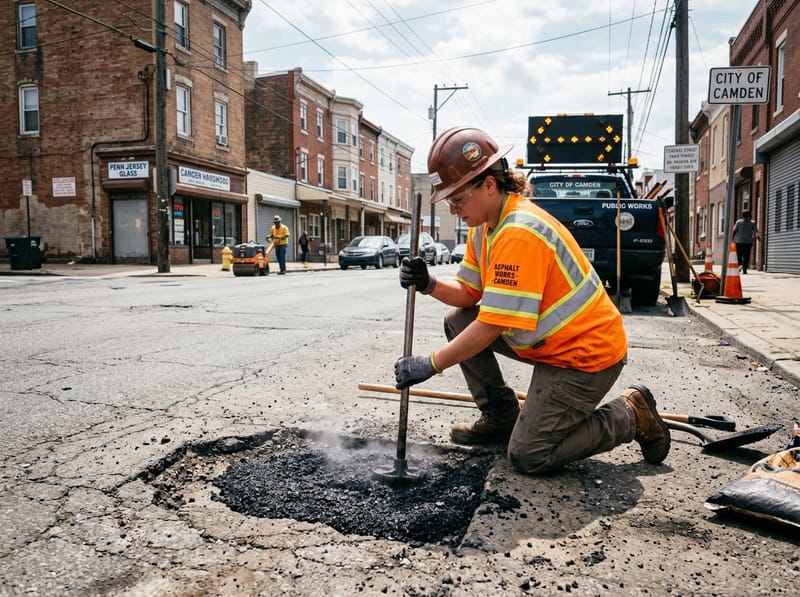
Next comes preparation. We clean the cracks thoroughly so the sealant has a better chance to bond and stay flexible. Loose debris, vegetation, and contamination are removed because even a strong sealant cannot do its job if the crack is not prepared correctly. If needed, we take additional steps to open or shape the crack so the material can sit properly and create a more reliable seal.
Once the surface is ready, we apply the sealant and tool it into place so the opening is filled cleanly. The goal is to create a flexible barrier that moves with the pavement instead of hardening into a brittle line that breaks apart later. After the application, we allow the material to set properly before returning the surface to service. That helps the repair perform as intended and keeps the finish neat.
For property owners in Camden, this process provides a practical way to protect asphalt without interrupting the site more than necessary. It is a dependable maintenance service that focuses on prevention, workmanship, and clear communication from start to finish.
- Inspection: identify active cracks and determine whether sealing is the right repair.
- Cleaning: remove dust, debris, and loose material so the sealant can perform well.
- Application: place the sealant in the crack and smooth it for a clean finish.
- Curing: allow the material to set before normal use resumes.
That process is the difference between a quick cover-up and a repair that is meant to help the pavement hold up longer.
Why Camden Property Owners Choose This Service
Crack sealing is one of the most practical services available for protecting asphalt because it addresses damage before it grows into a larger problem. For property owners in Camden, that means more peace of mind and less risk of costly deterioration spreading across the pavement. It is a service built around prevention, which is often the most dependable way to manage asphalt maintenance.
Customers also appreciate that this work is direct and measurable. You can see the cracks being cleaned, filled, and sealed, and you can understand exactly what the service is doing for your pavement. That clarity matters when you are making decisions about maintenance. Instead of guessing, you get a clear recommendation based on the condition of the surface and the type of damage present.
Blacktop Bosses Camden approaches crack sealing with a dependable service mindset. We focus on clear expectations, careful preparation, and results that support the long-term condition of the pavement. When warranty coverage applies to a project, we explain the terms plainly before work begins so there are no surprises. That kind of communication helps property owners make informed decisions and feel confident about the repair plan.
Crack sealing in Camden is especially valuable when you want to maintain the surface you already have instead of rushing into major reconstruction. It is a smart way to protect an investment, preserve curb appeal, and keep asphalt serviceable for as long as the condition of the pavement allows.
- Dependable maintenance: a practical step that helps slow further damage.
- Clear value: targeted repair that supports the life of the pavement.
- Confidence: straightforward service backed by our commitment to quality work.
When the cracks are handled early, the pavement has a better chance to stay sound, useful, and easier to manage over time.